Think of mansaf for its jameed sauce, maqluba for its layers of rice, meat and vegetables turned out of a pot, and zarb for its underground oven. When ordering for a family, ask about the meat and vegetables, chili peppers and included sides.
The moment we turned the pot over
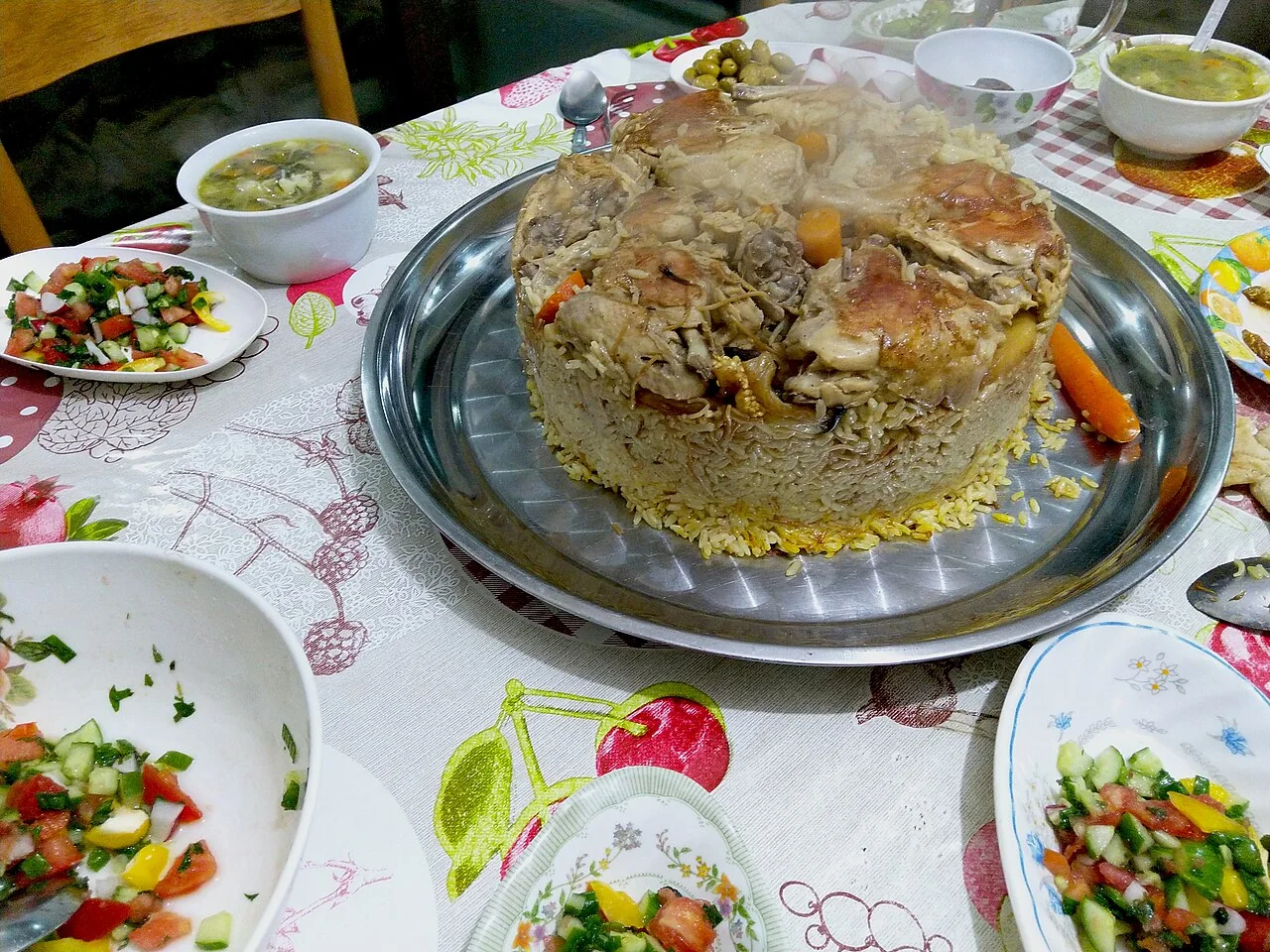
A friend from Kuwait once made maqluba for me. I got to turn the pot over myself, releasing the food onto a large tray. Being part of that final moment was a different kind of pleasure from simply sitting down to a finished meal.
The chicken was wonderfully tender, and I especially liked the maqluba with eggplant. The children enjoyed it too. Partway through the meal, I added some gochujang. To my taste, it cut through the richness and had me going back for more.
Mansaf is another dish my family and I have enjoyed. If you are choosing from a Jordanian menu for the first time, I hope these two experiences—and a comparison with zarb, which you may encounter on your travels—will help. The mansaf and maqluba stories come from meals I have eaten; the zarb guide below draws on Jordan Tourism Board information.
How to tell the three dishes apart on a menu
You do not need to memorize every name. Look for the defining detail: the sauce, the way the food is served or the way it is cooked. This table compares typical versions. Check the actual meat and vegetables with the restaurant or the person preparing your meal.
| Dish | What sets it apart | What to ask when ordering |
|---|---|---|
| Mansaf / منسف | A well-known Jordanian dish of rice and lamb with jameed sauce | Which meat is used and how the sauce is served |
| Maqluba / مقلوبة | Rice, meat and vegetables cooked in layers, then turned out of the pot | Whether it uses chicken or another meat, and which vegetables, such as eggplant, are included |
| Zarb / زرب | Meat cooked in an underground oven | Which meat and accompaniments are available that day, and whether you need to book |
Sources: Jordan Tourism Board · Feasting in Jordan · Fatimah · Palestinian Chicken Makloubeh
Maqluba: tender chicken and eggplant are my choice
Maqluba is closely associated with Palestinian cooking and is also widely enjoyed in Jordan. You may see several spellings on menus, including Maqluba and Makloubeh. The friend who made it for me came from Kuwait; that is simply part of the story of our meal.
Published recipes include chicken and eggplant versions, as well as examples using potatoes or cauliflower. So after asking for maqluba, it is worth checking which vegetables are in it. I preferred the version with eggplant, but there is no single combination everyone has to like best.
If you would like to try turning the pot over yourself, ask before ordering whether it is served that way. My part was the final step of serving the meal my friend had made. Restaurants do not all invite guests to turn the pot over; your meal may arrive already plated.
Sources: Fatimah · Palestinian Chicken Makloubeh · Jordan Tourism Board · Food and Drinks
Mansaf: jameed sauce is different from yogurt on the side
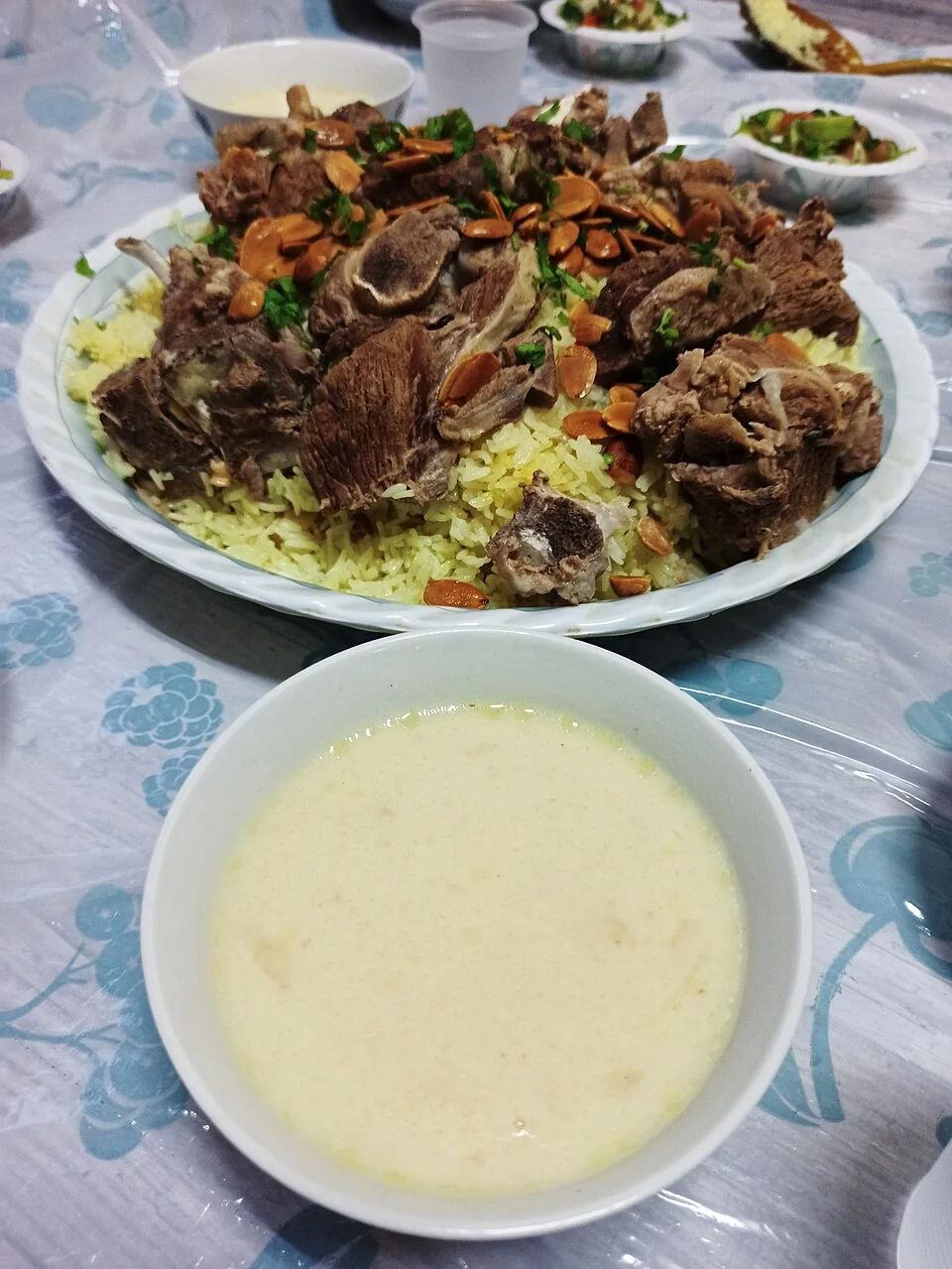
The ingredient to remember with mansaf is jameed (جميد). Its sauce, made with dried fermented yogurt, is an important part of the dish. Think of it separately from the plain yogurt you might order alongside your rice.
There is more than one way to make mansaf sauce. Fatimah's published recipe, for example, combines jameed with a yogurt drink. If you are ordering it for the first time, my suggestion is to ask whether the sauce can come separately, then try a little at a time if the serving arrangement allows.
Serving it separately is something to ask about, rather than an option to assume. If sauce has already been added to part of the dish, it may not be possible to separate it completely. Briefly explain if you would like to control how much sauce you have or how strong it tastes.
Sources: Fatimah · Jordanian Mansaf
Keep zarb in mind if Wadi Rum is on your itinerary
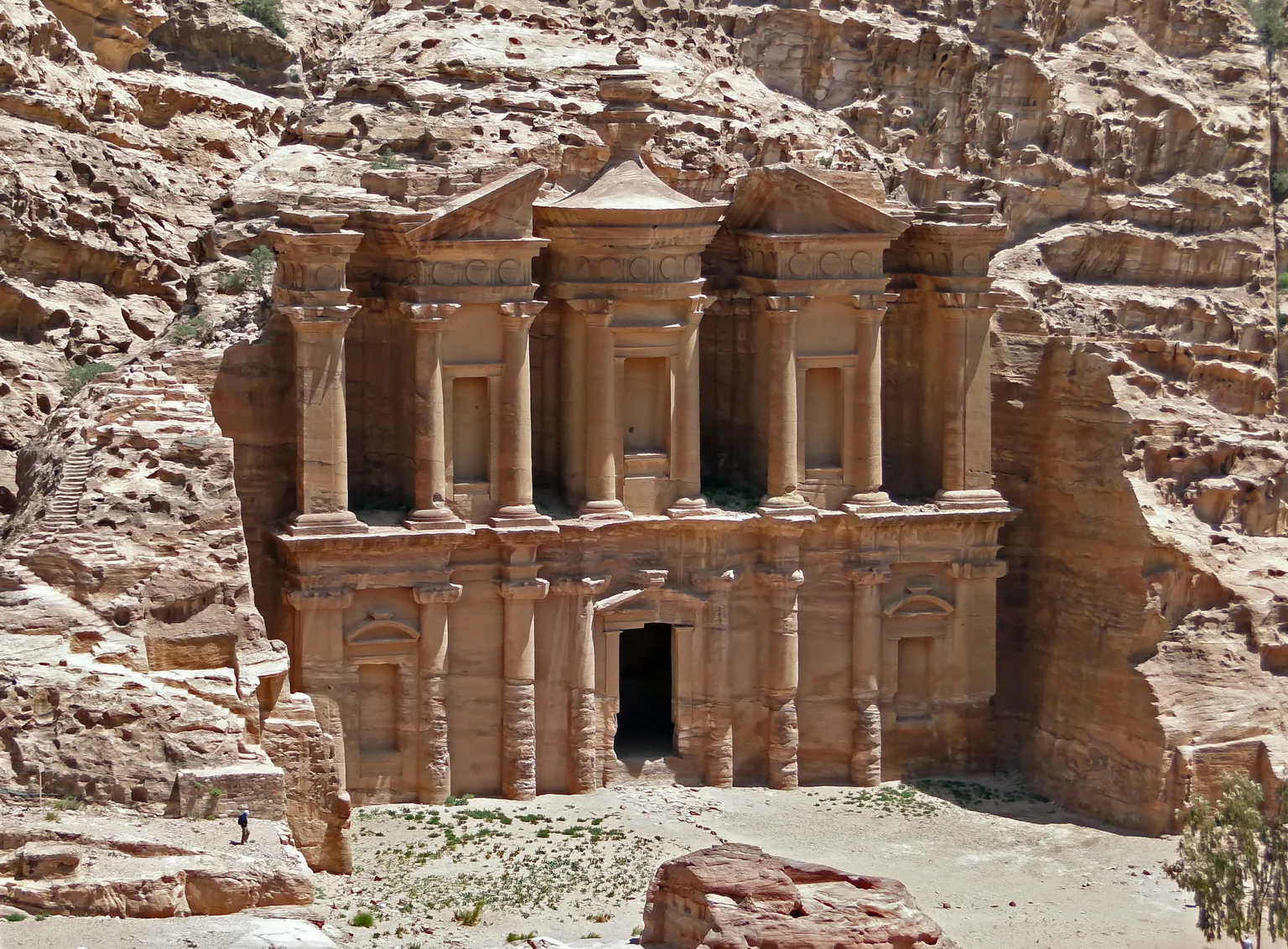
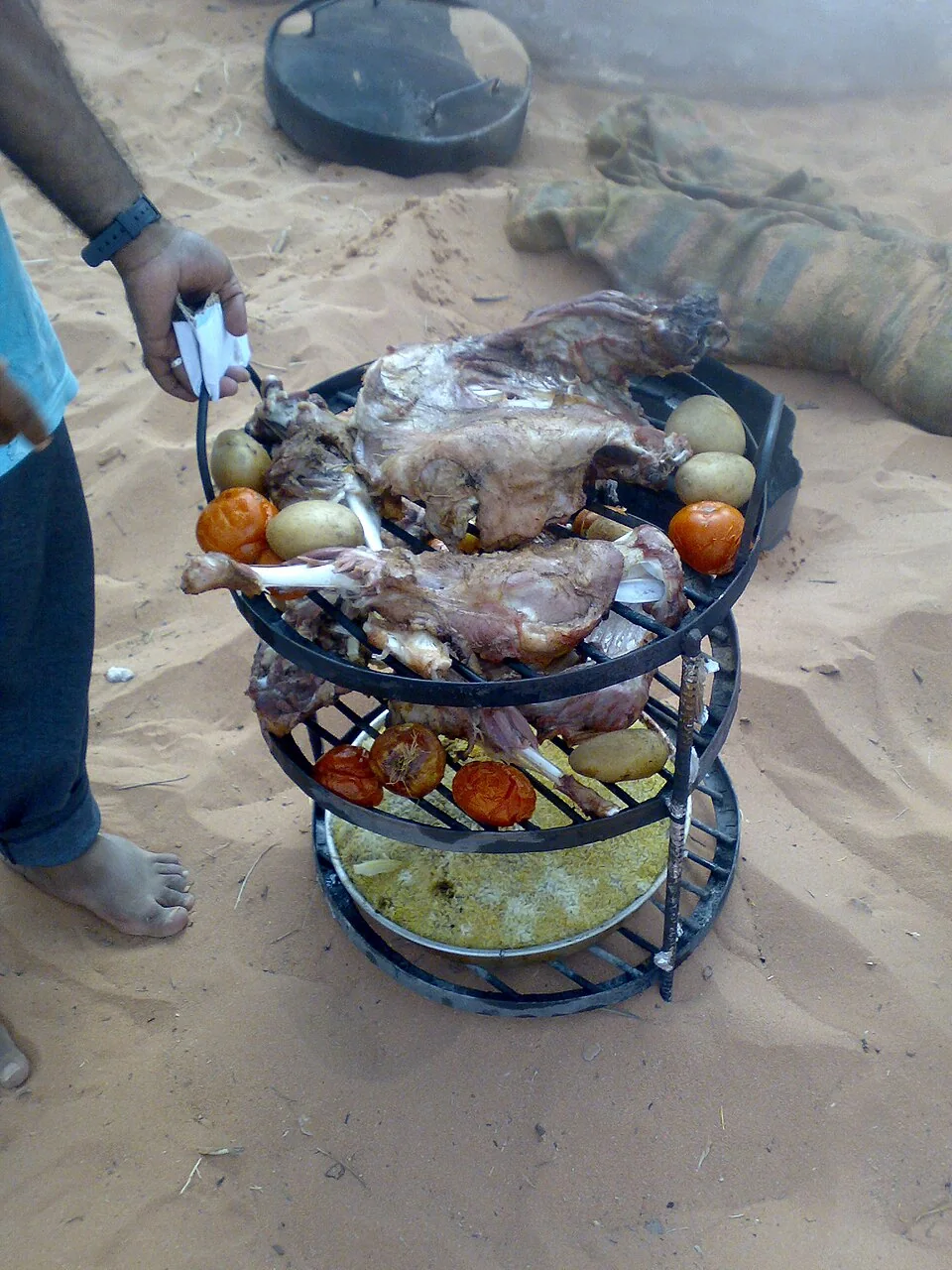
The Jordan Tourism Board associates zarb with the Hasma Desert, where Wadi Rum is located. Its defining feature is lamb or chicken cooked in an underground oven. I include it here to help you understand the menu, rather than as an account of a meal I have eaten.
If you have booked a camp, look beyond the words “dinner included” and ask what will actually be served. Check whether zarb is on the menu, which meat is used, and what food and sides there will be for your children. If you would like to watch the food being lifted out of the ground, ask about the serving time and whether guests can watch.
Sources: Jordan Tourism Board · Food and Drinks · Jordan Tourism Board · Feasting in Jordan
Fattoush and yogurt alongside the main dish
We usually have sides such as fattoush and yogurt with mansaf or maqluba. Thinking about the whole table, as well as choosing a main dish, makes the meal more enjoyable.
Fattoush (فتوش) is a salad of vegetables and pieces of bread. Barihan's recipe, published by Anera, includes tomatoes, cucumbers, herbs and toasted bread. The details can vary from one place to another. The tourism board also describes salad or yogurt as accompaniments to maqluba.
First, ask whether salad and yogurt are already included with your main dish. If they are extra, choose the sides you would like and mention if you need plates for sharing. My suggested starting point is one main dish with a salad, adding yogurt if you wish. Decide how much to order once you know the size of the platter and have considered your group's appetites.
Sources: Anera Community Recipes · Maqluba and Fattoush · Jordan Tourism Board · Food and Drinks
Making room for the children's tastes—and my gochujang
The mansaf and maqluba our family ate were not spicy, and the children liked both. I particularly enjoyed the maqluba with its rice and tender chicken. Our children's enjoyment, though, does not tell you how every restaurant prepares these dishes or what every child will like.
When ordering, try asking whether the dish contains chili peppers and which meat and vegetables it uses, rather than simply asking whether it is suitable for children. If your group has different preferences, you can also ask whether sauces or sides can be served separately.
The gochujang was my own Korean addition, rather than a customary local pairing. If you would like to try a variation like this, my suggestion is to taste the dish first, then add a little at a time to a portion you have set aside for yourself. Everyone can enjoy their own preferences while leaving the shared platter as it is.
Questions to show your server in Korean, English and Arabic
Choose the sentences you need and show them to your server. The Arabic uses clear standard wording. Whether ingredients can be changed or items served separately depends on how the kitchen prepares the dish.
| 한국어 | English | العربية |
|---|---|---|
| 이 요리에는 어떤 고기를 쓰나요? | What kind of meat is used in this dish? | ما نوع اللحم المستخدم في هذا الطبق؟ |
| 매운 고추가 들어가나요? | Does this dish contain chili peppers? | هل يحتوي هذا الطبق على الفلفل الحار؟ |
| 자미드 소스를 따로 받을 수 있나요? | Could you serve the jameed sauce separately? | هل يمكن تقديم صلصة الجميد على حدة؟ |
| 샐러드와 요거트도 포함인가요? | Are salad and yogurt included? | هل السلطة واللبن مشمولان؟ |
| 이 양은 몇 명이 먹을 수 있나요? | How many people does this portion serve? | كم شخصًا تكفي هذه الكمية؟ |
The food memories that guide our family's choices
For me, maqluba brings back the moment I turned the pot onto the large tray, the tender chicken, the rice with eggplant and the gochujang I added alongside it. Remembering an ingredient I enjoyed has often been more useful for my next order than memorizing a dish's name.
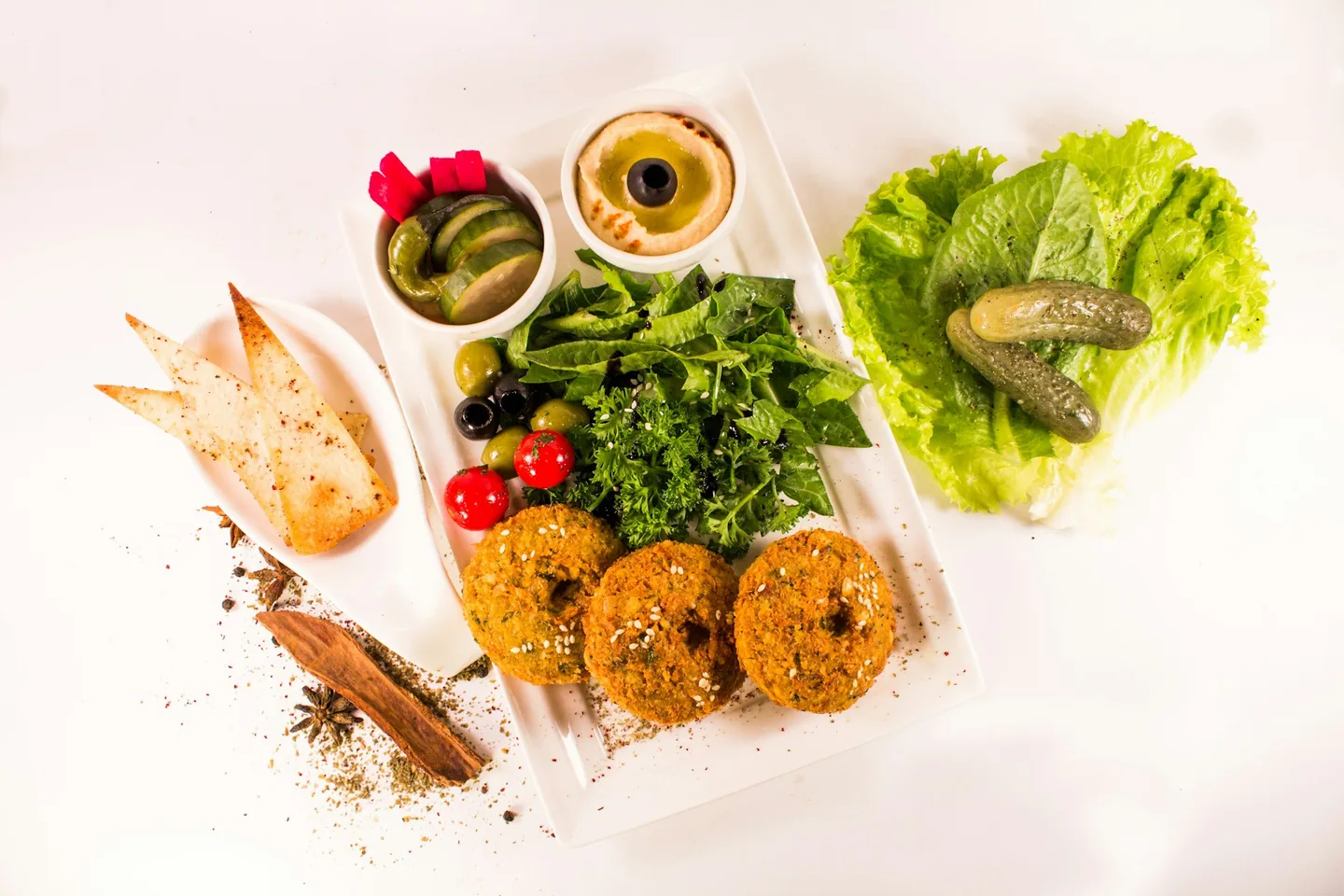
For your first meal, check the meat and vegetables in the main dish, then decide how to pair it with salad or yogurt. If you would like to choose some starters too, continue to our guide to the differences between hummus, mutabbal and baba ganoush.
How to choose hummus, mutabbal and baba ganoush